2 Creation
The first thing I want you to do is consider an answer to a question. Mathematical scientists: what is the most interesting or elegant solution, derivation, or proof you have seen or executed and the problem it solved? Engineers: what is the most interesting or elegant thing you ever created and the problem it solved? I’ll give you a few seconds to quietly think of your answer.
Those on the end of each row, check the color of your sign. If it’s blue, raise your hand and point backward so everyone in your row can know your direction. If your sign is fuchsia, raise your hand and point forward so everyone in your row can see your direction. Again, blue backward, fuchsia forward. Those in the center, note your direction.
This might create a little chaos, but when I say “go,” turn around or lean forward and share your answer with a person or two in your vicinity. I’ll give you 1 minute total, so be quick. Go!
Thanks for sharing with one another!
Here’s my answer:
When I worked at NASA JPL in Pasadena, California, I was in a group tasked to solve the problem of collecting data at the surface of Venus. For those who don’t know, Venus is a very interesting, but inhospitable, place. Interesting, because it’s very similar to Earth in both size and location in the solar system. Inhospitable, because of the
- very dense CO2 atmosphere,
- surface temperature of 460 °C and
- surface pressure of 92 Earth atmospheres.
Oh, and the sulfuric acid droplets in the “air.” If the temperature and pressure don’t kill you, the sulfuric acid will!
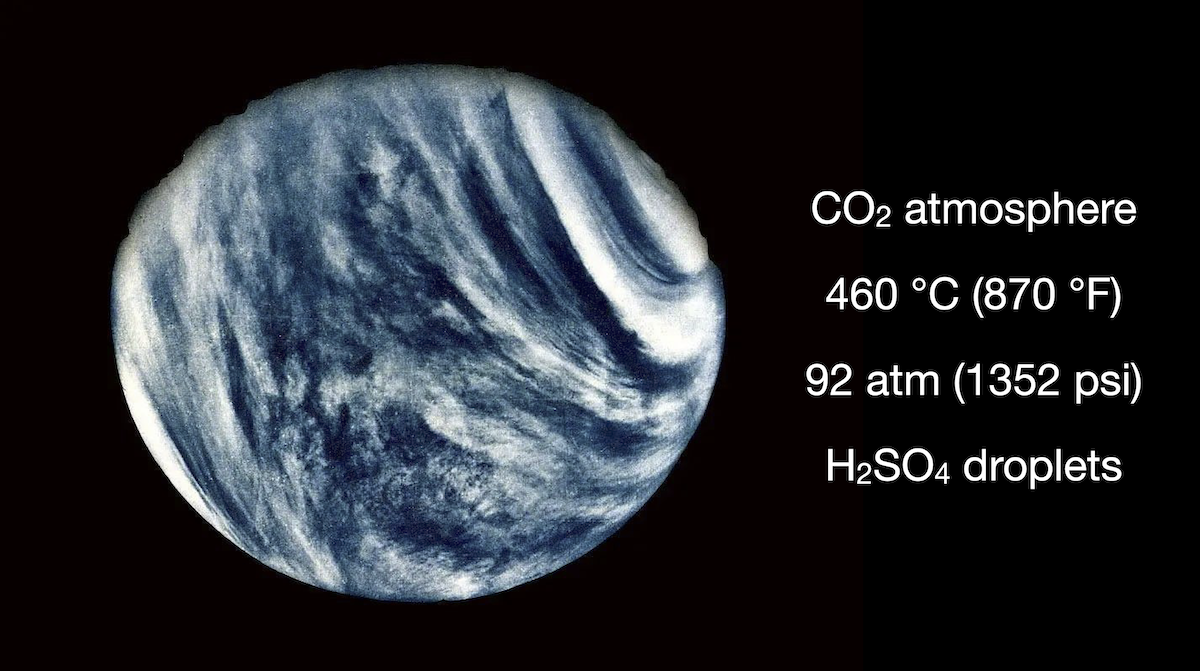
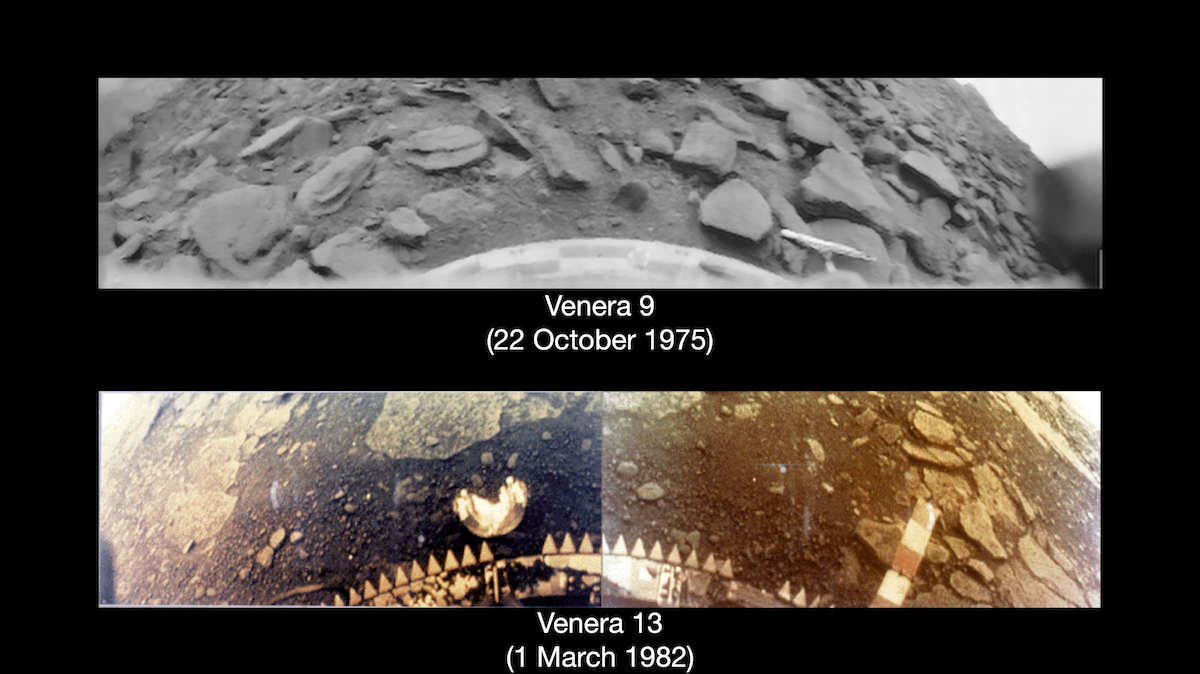
It’s difficult for any machine to survive at the surface of Venus, although the Soviet Union’s Venera 9 did for a grand total of 53 minutes in 1975, sending back the first image taken on the surface of another planet. The first color images were taken by Venera 13.
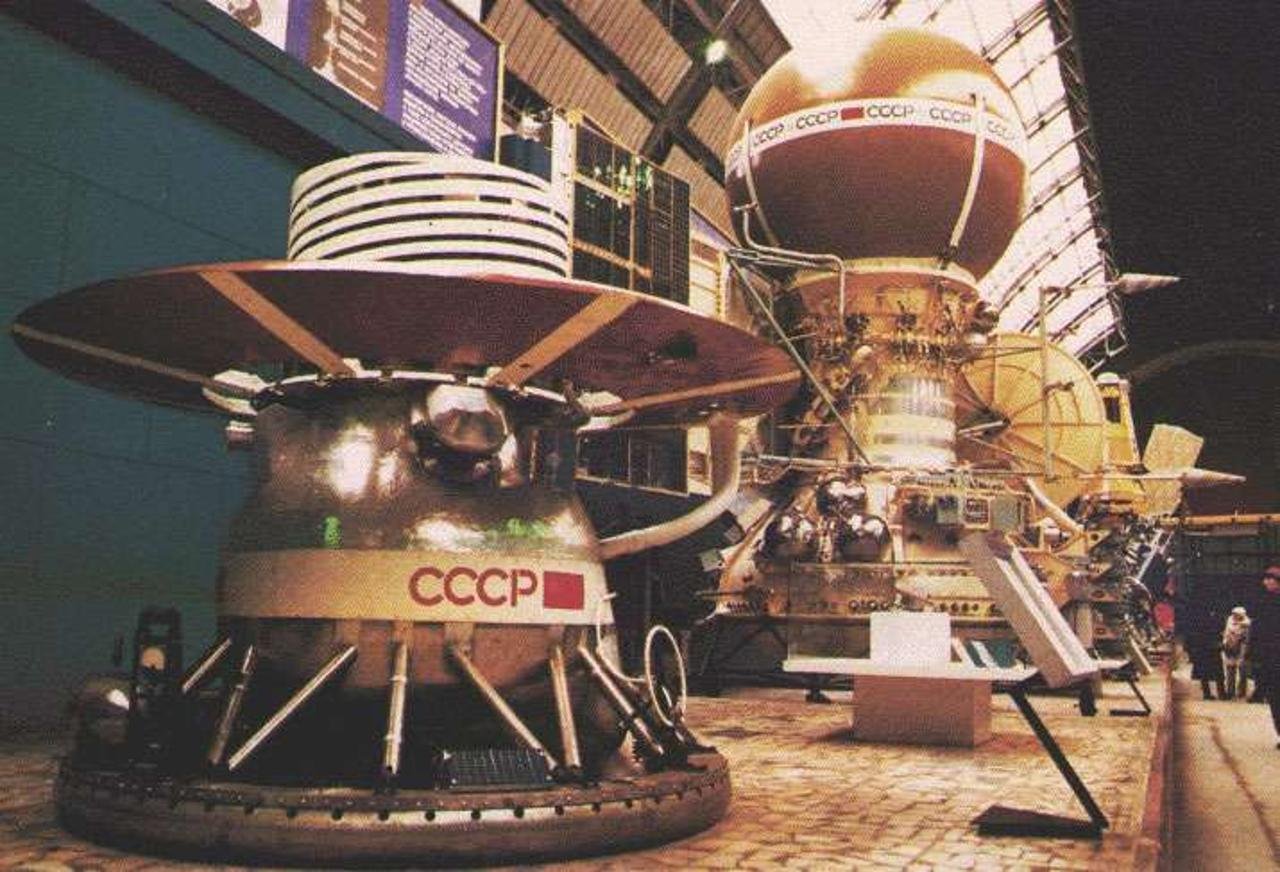

The solution we designed was a gold-plated zylon ballon system that would fly about 50 km above the surface of Venus, descending periodically to take photos and collect in-situ data at or near the surface. The machine used a mixture of helium and water whose boiling and condensation would change system buoyancy and, therefore, altitude. We called it a “phase-change fluid” (or PCF) balloon system.
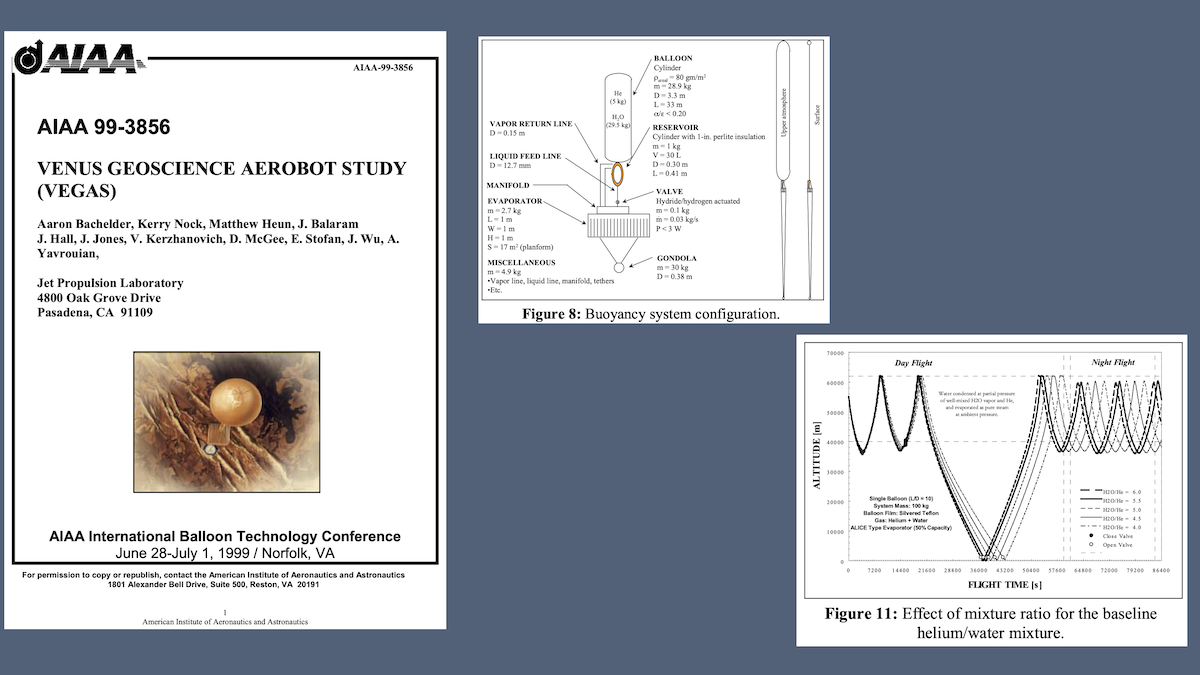
We tested a series of prototype machines in Earth’s atmosphere, launching from Pasadena and chasing the balloons eastward.
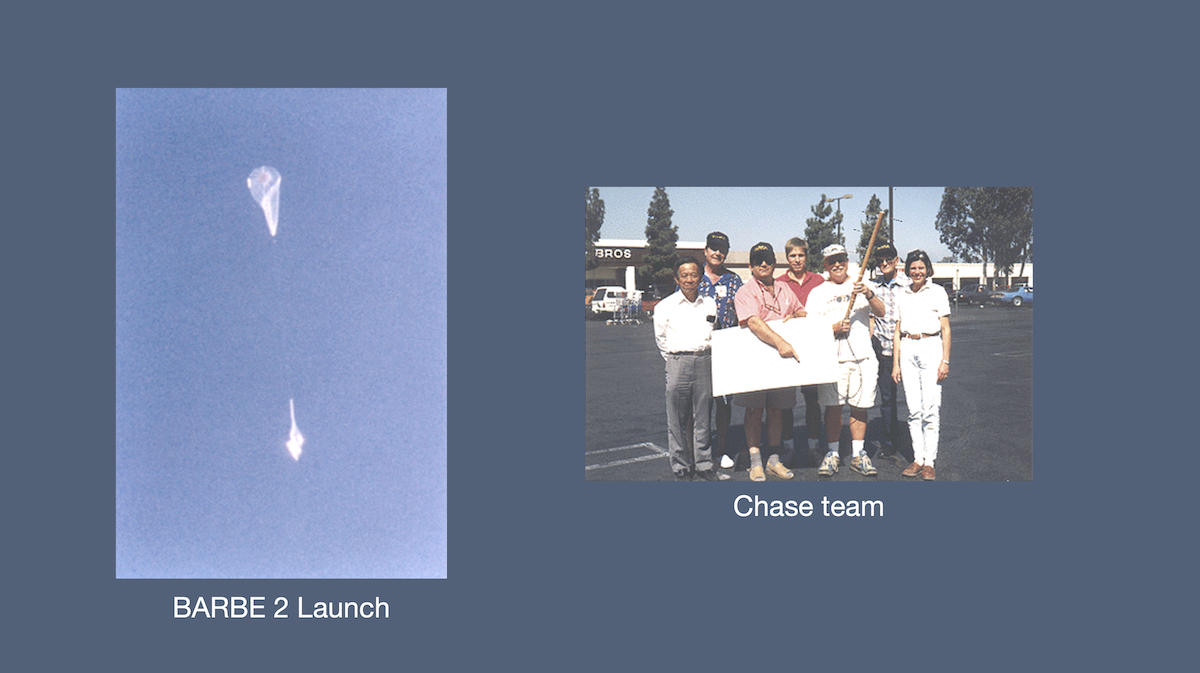
Engineers call the process of creating new things to solve problems design: deciding sizes, shapes, and materials for pieces in a system or machine. We engineers design with materials and energy from the world around us, combining them in original and novel ways. We at JPL didn’t invent polymers, gold, helium, or water, but we combined them in new ways to be the balloon envelope, the buoyant gas, and the phase-change fluid of our system to create a new machine to solve the problem of obtaining data in the inhospitable environment at the surface of Venus. In the process, our Earth-based prototype became the first, and to date only, machine of this type to fly successfully.
2.1 Where mathematics and engineering collide
The next thing I want to discuss is how engineers go about this designing. To do so, I’ll share another story. Randy Pruim is the keynote speaker tomorrow, and, in case you’re worried, he knows I’m about to do this.
More than 10 years ago, we began collaborating on this paper published in the journal Energies. The paper contains this figure.
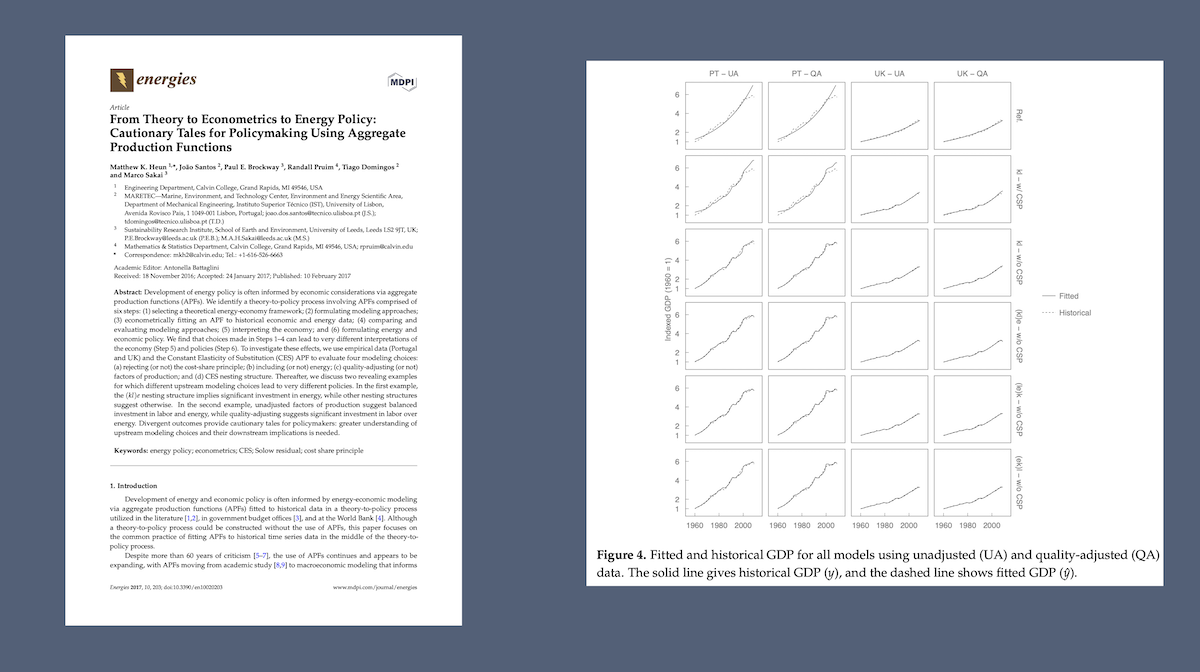
I’ll zoom in so you can see more clearly. Historical observations of GDP are indexed to 1 in 1960 and shown as a dashed line. Fitted model data are shown as a solid line.
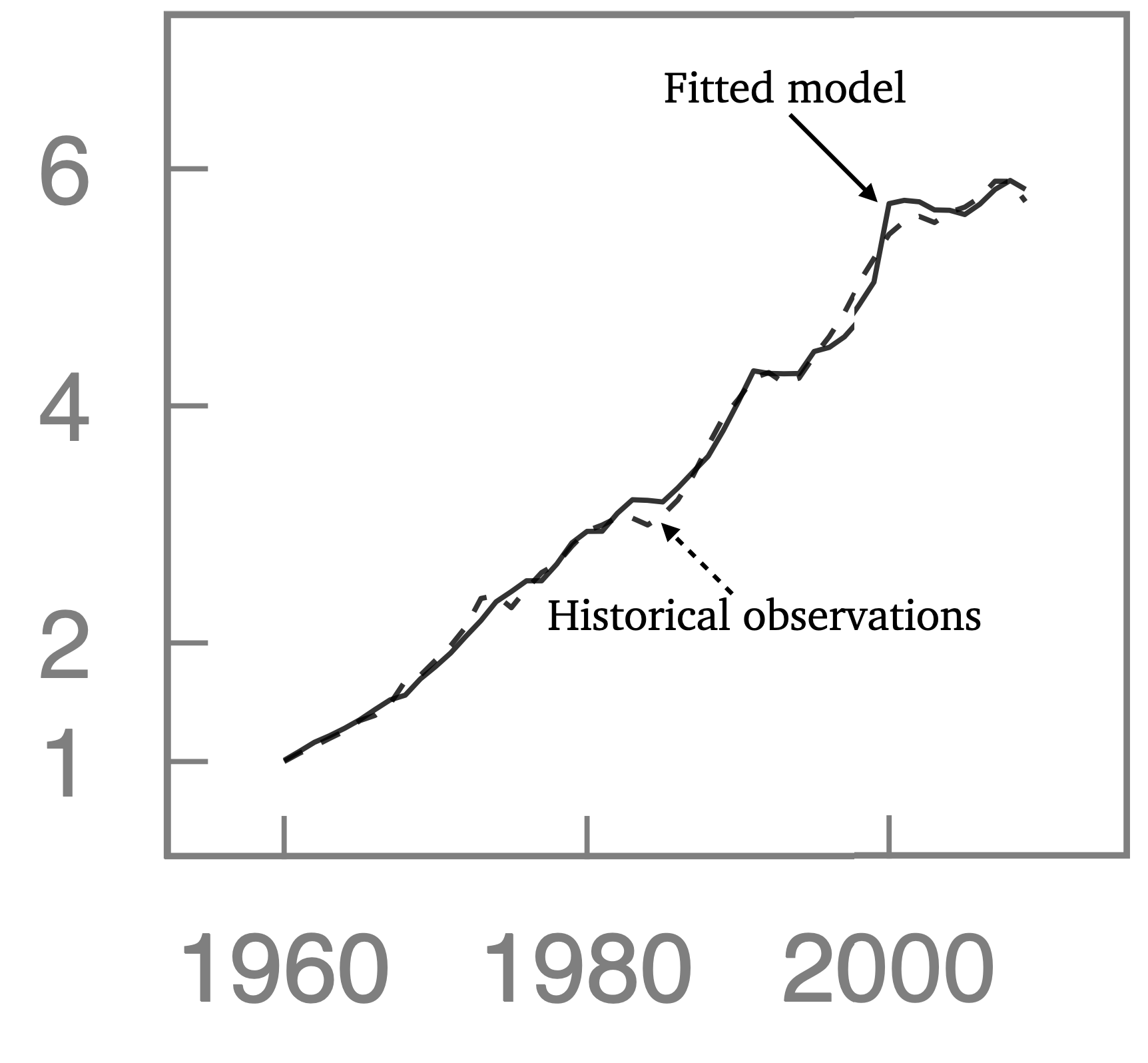
During our work together, we disagreed about the right way to calculate the sum of squared errors (SSE) between observations and a model or between a model and observations.
Without yet saying who held which view, I’ll show you the two options we debated. And by the way, although I remember this disagreement in vivid detail more than a decade later, I’m not bitter. And, as David Letterman used to say, this only an exhibition; this is not a competition. Please, no wagering on who was right.
Option A is this: the sum of squared errors is the sum over all historical observations (i) of the square of historical GDP less fitted GDP.
\[ SSE = \sum_i{(GDP_{historical,i} - GDP_{fitted,i})^2} \]
Option B is the sum over all historical observations of the square of fitted GDP less historical GDP.
\[ SSE = \sum_i{(GDP_{fitted,i} - GDP_{historical,i})^2} \]
I also include versions of the equations with the typical nomenclature found in textbooks: \(y\) and \(\hat{y}\). For Option A:
\[ SSE = \sum_i{(y_i - \hat{y}_i)^2} \, . \]
For Option B:
\[ SSE = \sum_i{(\hat{y}_i - y_i)^2} \, . \]
The question to you is this: which option is right, Option A or Option B, and why? And no fair sitting on the fence. You can’t say “it doesn’t matter,” because it does! You must choose one or the other, A or B!
I’ll give you a few quiet seconds to decide.
Now comes the second thing I want you to do today. Not yet, but when I say “go,” turn around or lean forward and share your answers. If you find you disagree, make the case that your answer is the right answer. If you agree, develop arguments for your position and against the other option. Take 1 minute to discuss with the same conversation partners as before. Go!
Thanks for having this discussion! Perhaps you can use this question as a conversation starter for those awkward times when you’re early to a session and find yourself next to someone you don’t know.
Before I share more about the disagreement between Randy and me, I’ll share why I think it matters.
The subtrahend (the term after the minus sign) is the thing you consider real or correct or true. In contrast, the minuend (the term before the minus sign) is the thing you are testing.
Option A implies that the true GDP is represented by the fitted model. The historical observations are an imperfect and imprecise measurement of true GDP. When our observations are too high, we have positive measurement error. When our observations are too low, we have negative measurement error. If we had better observations, they would conform to the truth of the model. For Option A, the model is the thing that’s real.
In contrast, Option B suggests that the only thing we know is our observations in the concrete and tangible world. Abstract fitted models are meant to describe our concrete observations, not the other way around. When the fitted model is greater than an historical observation, our model is overpredicting GDP, and we have positive model error. If the model prediction is less than an observation in any year, our model is underpredicting GDP, and we have negative model error. For Option B, the observations are the thing that’s real.
Randy said (in my recollection, verbatim): “The model is the thing that’s real.” I contended that the observations are the thing that’s real. Who is right?
2.2 How engineers design
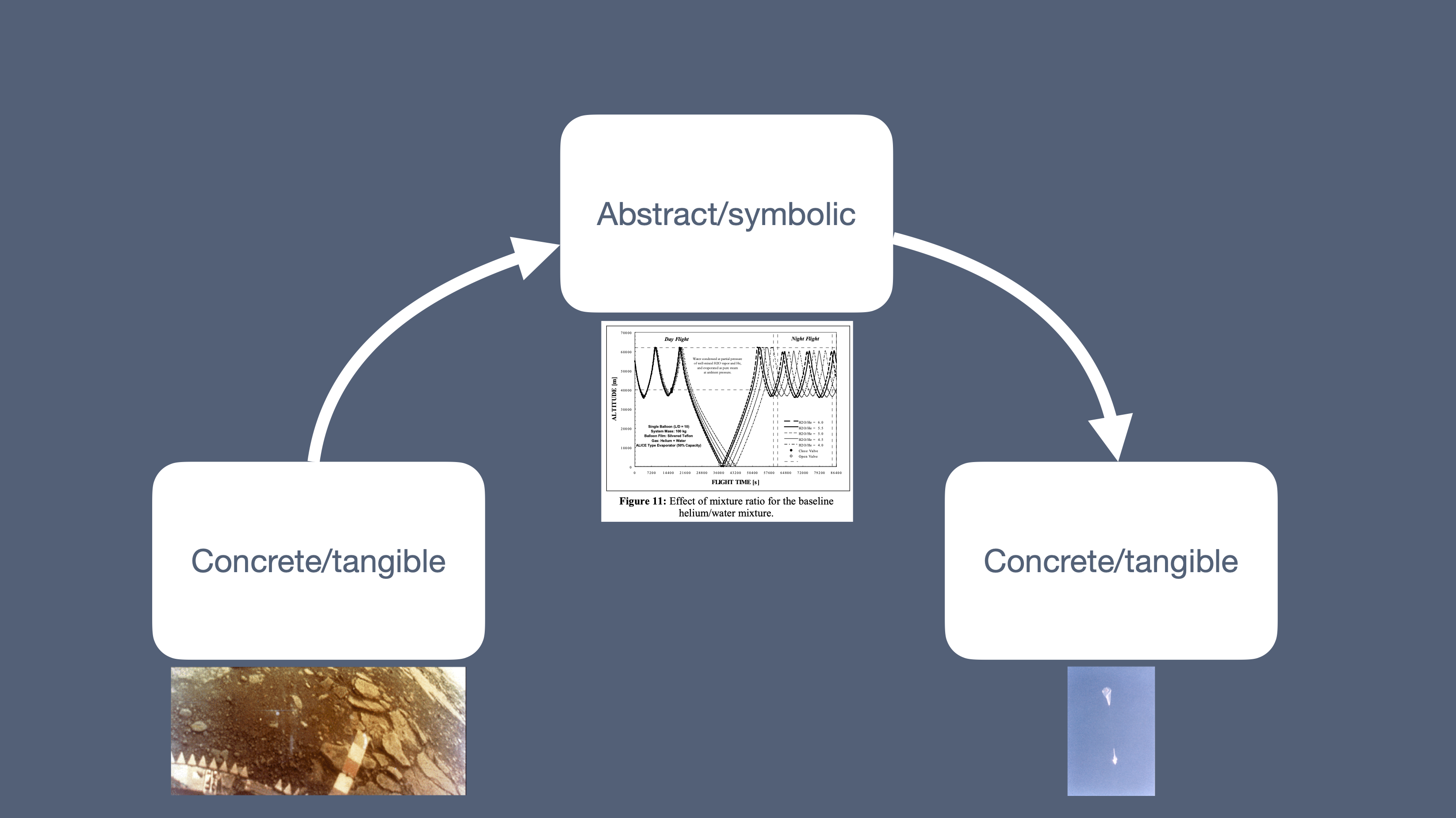
Returning to my example, engineers solve concrete, tangible problems such as how to collect data at the surface of Venus. To do so, we design, using, in part, calculations and other manipulations in symbolic, abstract space, represented here by predicted altitude profiles of the Venus balloon system. We bring the results of those calculations and symbolic manipulations back into concrete, tangible space in the form of prototypes, products, or machines that solve the problems. In fact, in engineering design, the abstract and concrete worlds collide! We engineers and mathematical scientists move with ease from the concrete and tangible space to the abstract and symbolic space and back; repeatedly and often.
Let’s try it here. Answer this question to the person you’re sitting beside. What’s this?

I’m not trying to be insufferable. But, well actually, it’s a projected-light photo of the Roman Colosseum. It is an abstract representation of the Colosseum, which is a concrete, tangible thing. But we are willing to simply say “it’s the Roman Colosseum.”
If you try this at home, the response is likely to be “Why are you being like this?” But it just shows that we’re quite adept at leaping from abstract representations to concrete language. The line between model and physical thing is blurry. In fact, it’s so blurry, we often don’t notice it. Or at least in our language, and therefore in our thinking, the image on the screen really is the Colosseum, not an abstract representation, not a photo, not photons!
Moving between the concrete and the abstract is the basis of mathematics. Developing abstractions is the goal of computer science! And the skill enables engineering design.
2.3 Implications of human creating
Moving between the concrete and the abstract is natural if you know how to do it, if you know how to think well abstractly. But not everyone can! And we’re not born with this ability.
Here is a photo of some people who can’t think abstractly very well at all.

When young children learn to play soccer, it’s still all about “me.” They all want the ball. Ideas of “self,” “other,” and “team” are nascent. There is little ability to think about things from another physical perspective, say from above one’s self where one could see that players from both teams are bunched around the ball. Because of their developmental level, it is folly to expect these people to “spread out,” regardless of how many times coaches or parents implore.
The ability to think deeply abstractly is one of the last skills that the human brain develops. Eventually, some of these kids might grow up to play for Liverpool or Real Madrid in the Champions League final in May 2022.
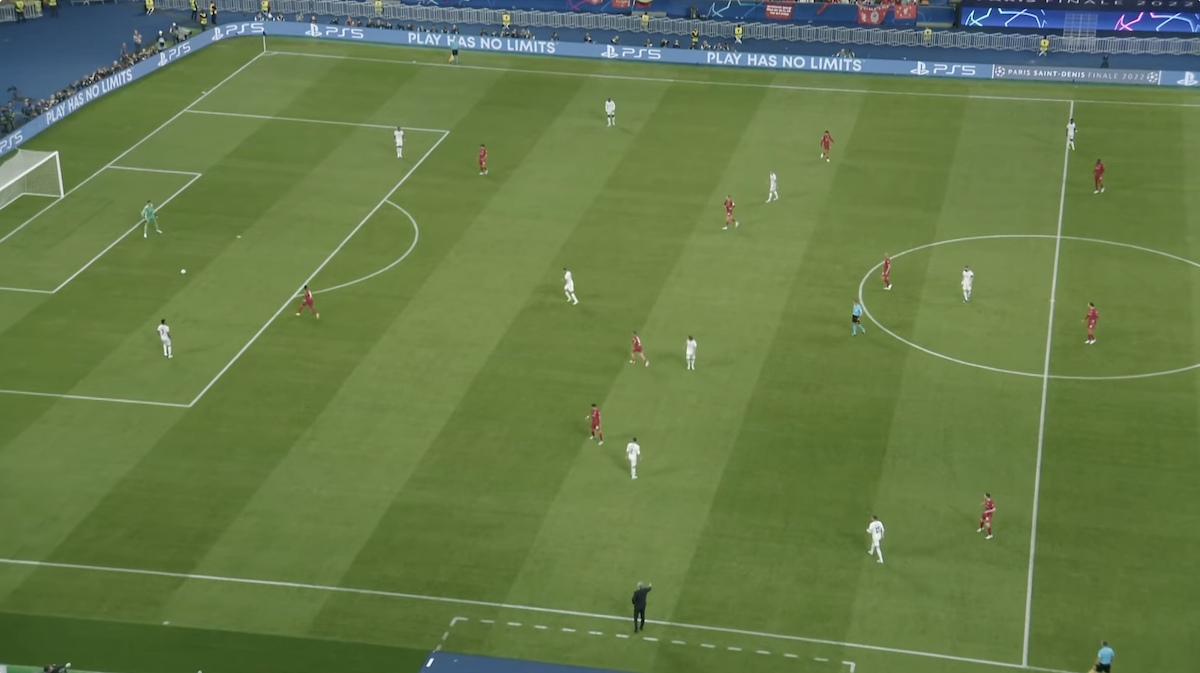
Now here are some people who can think abstractly! I’m not bitter about my decade-old dispute with Randy Pruim. But I am bitter that Real Madrid’s goalkeeper Thibaut Courtois had the game of his life that night to deny Liverpool the title!
Indeed, the more abstract a subject, the harder it is for students who are still developing their abstract-thinking skills. Similar to the kids who bunch together on the pitch, it is folly for me to expect my students to be mature designers who navigate with skill between the concrete and the abstract. Nonetheless, we teachers bring students along a developmental path from bunch ball to the Champions League final.
But from those who can navigate between the concrete and the abstract skillfully, what about the process of designing to solve problems? What can we learn from it?
We’ve all heard sermons on Genesis 1:27. “So God created humankind in his own image …” The verse is summarized by the Latin phrase, imago Dei, and the substantive interpretation of Genesis 1:27 holds that we humans share some of God’s characteristics. I submit that God created, so we humans (engineers, artists, sculptors, playwrights, mathematical scientists), we create.
As you know, there is a very important difference between human creating and God’s creating. Hebrews 11:3 says, “By faith we understand that the universe was formed at God’s command, so that what is seen was not made out of what was visible.” In distinction to the Creator who made the universe out of nothing (summarized by more Latin, ex-nihilo), we humans create from what we find around us.
But our creating is closer to ex-nihilo than you might think. The opening lyrics of Peter Gabriel’s 1986 song “Mercy Street” summarize this nicely.
Looking down on empty streets, all she can see
Are the dreams all made solid, are the dreams made real
All of the buildings, all of the cars
Were once just a dream, in somebody’s head
“Were once just a dream in somebody’s head” captures the ethereal nature of the original ideas from which we create. That’s from the abstract space. Skilled engineers know how to move those ideas into the concrete, tangible world. Skilled mathematical scientists can convert ideas into elegant proofs, functions, or analyses. Our creative work can be traced back to our being created in God’s image, albeit with the important distinction that we humans don’t quite create ex-nihilo.
Engineers: think again of the most elegant thing you created. Mathematical scientists: think again of the most elegant proof. Would anyone have done it exactly the same way as you? Probably not. What we create reveals us to the word around us, just as the creation reveals God. We know God, because we can see God in God’s handiwork, the work of God’s hands. One of the earliest articulations of the two books idea is attributed to Augustine. In my own Reformed tradition, Article 2 of the Belgic Confession states it thus:
We know God by two means:
First, by the creation, preservation, and government
of the universe,
since that universe is before our eyes
like a beautiful bookin which all creatures,
great and small,
are as letters
to make us ponder
the invisible things of God. …All these things are enough to convict humans
and to leave them without excuse.Second, God makes himself known to us more clearly
by his holy and divine Word. …
The fact that we are in-vested in our designs reflects how God is in-vested in the creation. Of course, engineers are not God, nor are we little gods as we go about our work. But the parallels between the work of engineers and God’s activity at creating the universe are striking.
So, back to the title of my talk. Engineering: what are we doing?
We engineers move between the concrete and the abstract and back again to design and create, reflecting the image of the Creator.
But human creating is fraught. There are several ways it can go wrong.