4 Redemption
If engineering design is so fraught with the Fall, human finitude, and the problem of scale, you might be wondering how we engineers design anything that serves intended purposes to solve problems in the concrete, tangible world we inhabit. There are several ways, each of which is a manifestation of common grace.
4.1 Overcoming the Fall
First, to overcome the problems of dishonesty, evil, and the Fall, we have codes of ethics. Ethics is Randy’s topic for tomorrow’s keynote, and I’m eager for it! For now, I note that the National Society of Professional Engineers code of ethics holds that engineers, in the fulfillment of their professional duties, shall do these six things.
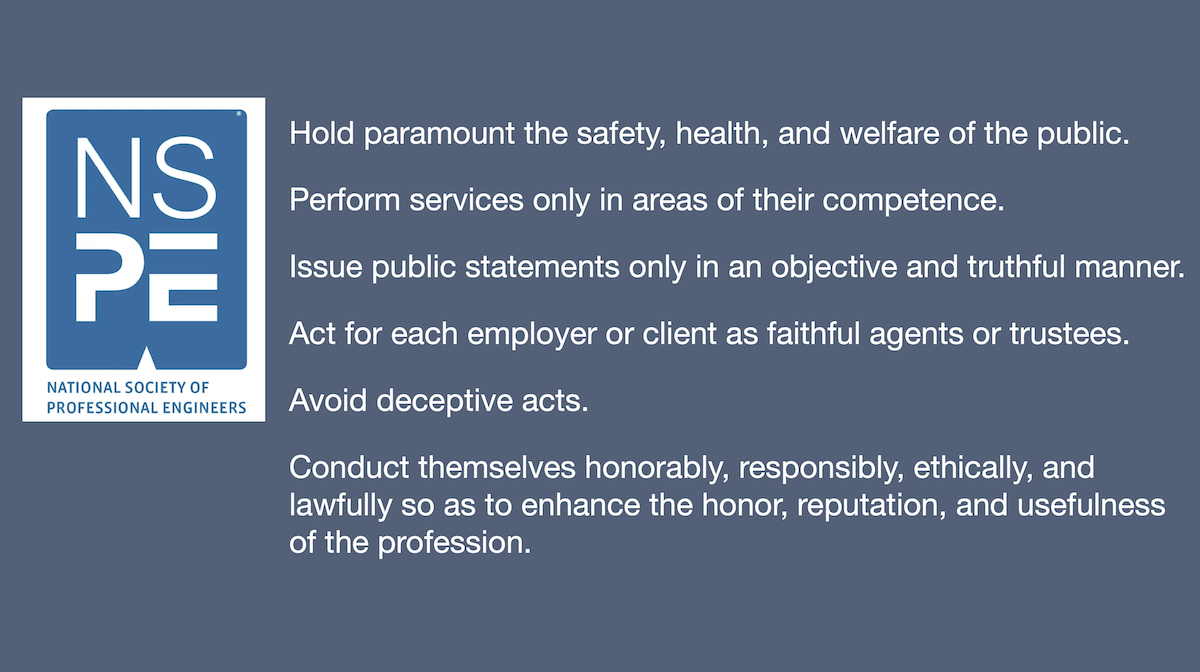
Codes of ethics are necessary but not sufficient for doing engineering well.
4.2 Overcoming human finitude
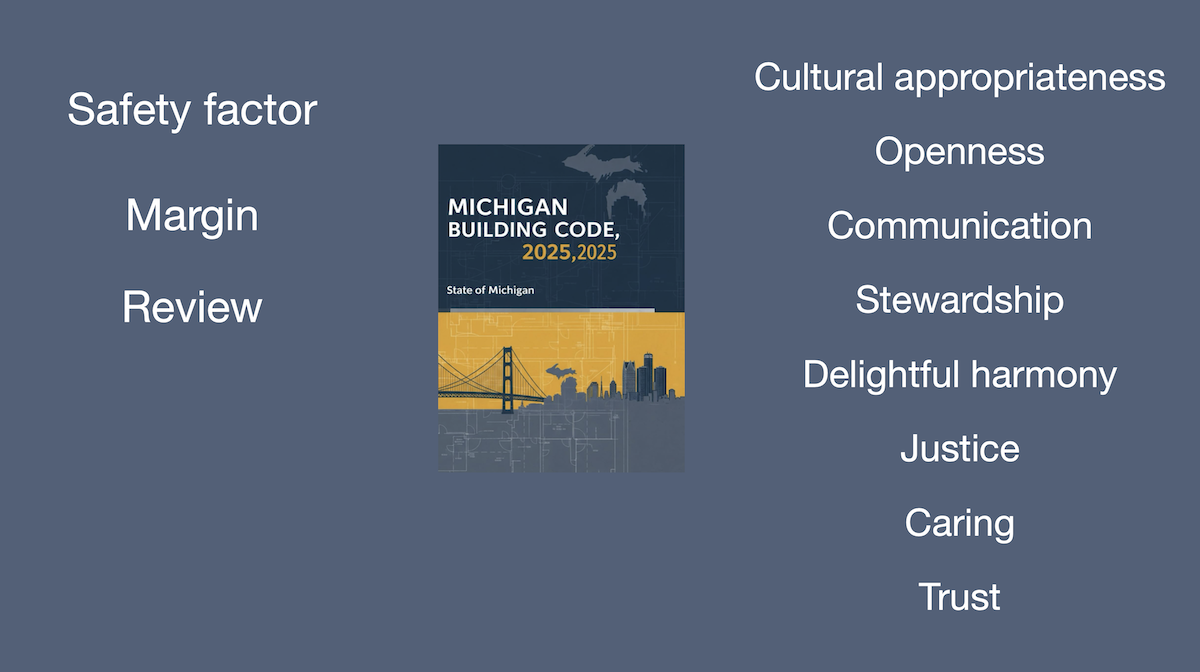
Next, there are several ways we attempt to overcome the problem of human finitude. First, we design bigger and stronger than our models say we need, just in case the material is flawed or not as strong as we expect or the loads are larger than we imagined. We quantify how much bigger or stronger by a multiplier, the safety factor.
We also use margin (reserved, mass, power, volume, or money) to address challenges that arise during the design process. Safety factors and margin guard against things in the concrete, tangible world being different from the abstract, symbolic space.
We use the review process to hopefully catch problems before going into production.
A second example is building codes.
A third example is design norms which encourage designers to consider many factors in their work. Perhaps you can think of more ways we guard against human finitude.
4.3 Overcoming the problem of scale
Finally, what about the problem of scale? Evidence shows that we have not yet solved the problem of scale, and, unfortunately, I don’t have an answer here. Nobody does.
In my observation, most engineers work at the micro level and are heads down to design and manufacture the next product, stay ahead of the competition, and solve today’s problems. There is rarely time to consider the problem of scale. In fact, as I noted before, many incentives point in the opposite direction from a solution. I don’t think we can expect individuals or firms, to solve the problem of scale at the micro level.
In education, we engineering professors are heads down teaching students to avoid evil and guard against human finitude. We teach codes of ethics, safety factors, margins, reviews, and design norms, all aimed at solving micro level problems. Sadly, very few engineering textbooks discuss the problem of scale or the macro level at all. So I don’t think we can expect the education system as presently constituted to solve the problem of scale.
Rather, the problem of scale is a macro level, systemic problem. And macro level, systemic problems need macro level, systemic solutions. I and others contend that the problem of scale is a governance issue at the macro level.
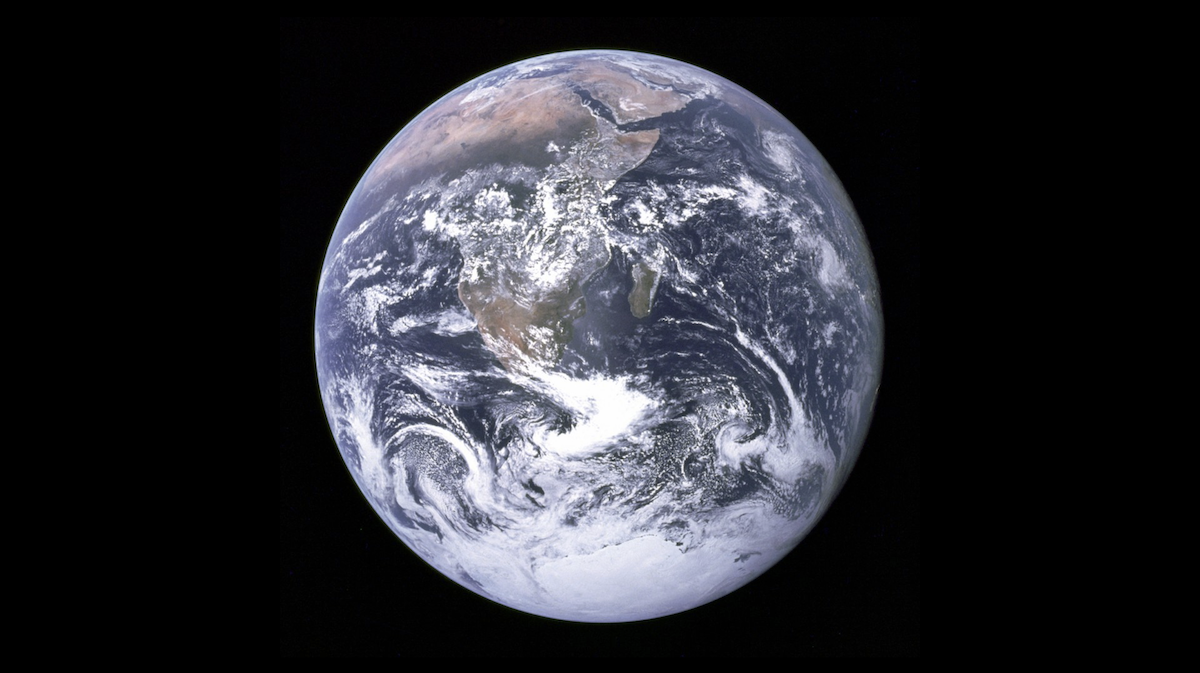
Unfortunately, few of us work at the macro level, maybe only national leaders or UN ambassadors. But even they have narrow constituencies, their citizens. To within rounding error, no one with any power operates at the global level with the nonhuman creation as their constituency.
So, is it any wonder that we are inside-outing the planet to run our economies?
If the problem of scale can’t be solved at the micro level, where most engineers work and where education is focused, is there any role for us? I think there is.
Practicing engineers can be laying the groundwork for the day when actors at the macro level are ready to meaningfully address the problem of scale. Individual engineers can use their creativity and designing to point in redemptive directions. We can make our moves from the concrete, tangible world to the abstract, symbolic space, and back again to bring about the flourishing of the non-human creation rather than its domination, if only at the micro level for now.
Engineering educators can point in redemptive directions, too, by exposing students to the problem of scale and the inside-outing of the planet in addition to teaching about the problems of evil and human finitude.
When all of us interact with the macro level, say when we vote, we can express our preferences that macro-level people and institutions start addressing the problem of scale sooner rather than later. Further, we can point in directions society needs to move, often called Earthkeeping, Creation Care, or Sustainability.
Perhaps some of you are thinking that macro level systems are comprised of many smaller systems. And you’re right! In fact, we are embedded in systems within systems in families, at work and church, in the university and the city. We can begin learning and teaching the skills to affect those micro and meso systems in positive ways today, again in preparation for the day that macro-level people begin addressing the problem of scale.
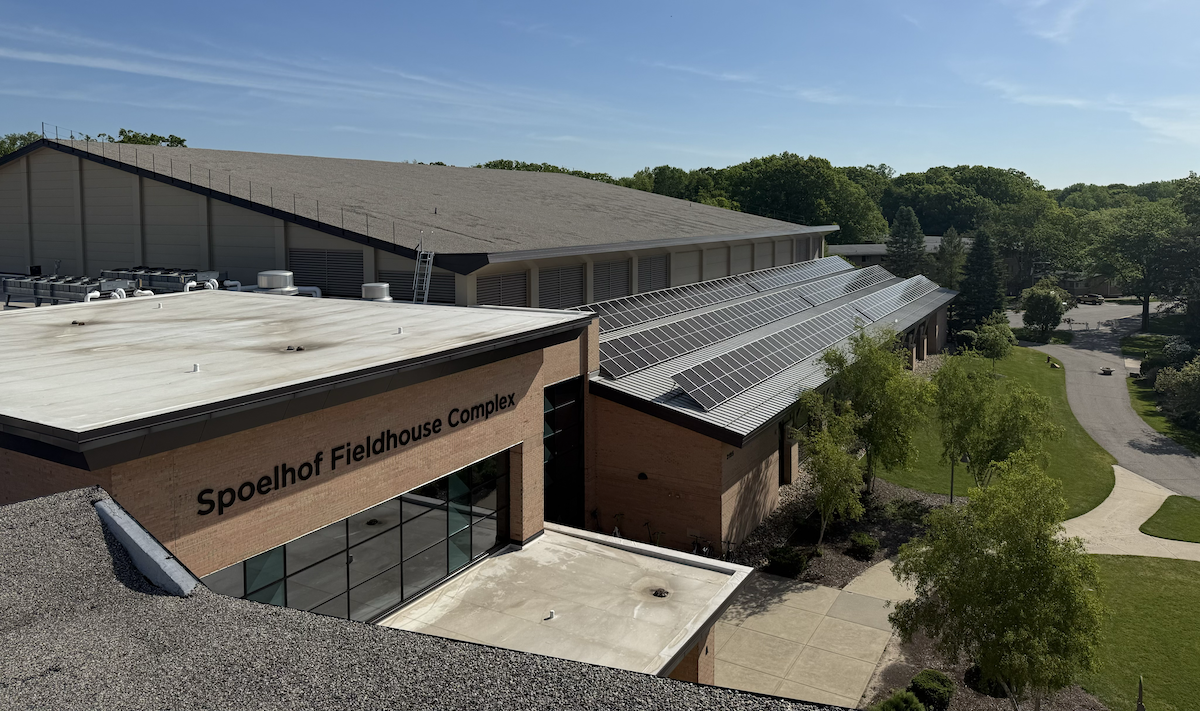
Although you might not have known it, if you walked past the Van Noord Arena and looked up to the roof, you will have seen an example of such redemptive system change on this very campus. There is a lot more going on here besides new PV panels on the roof!
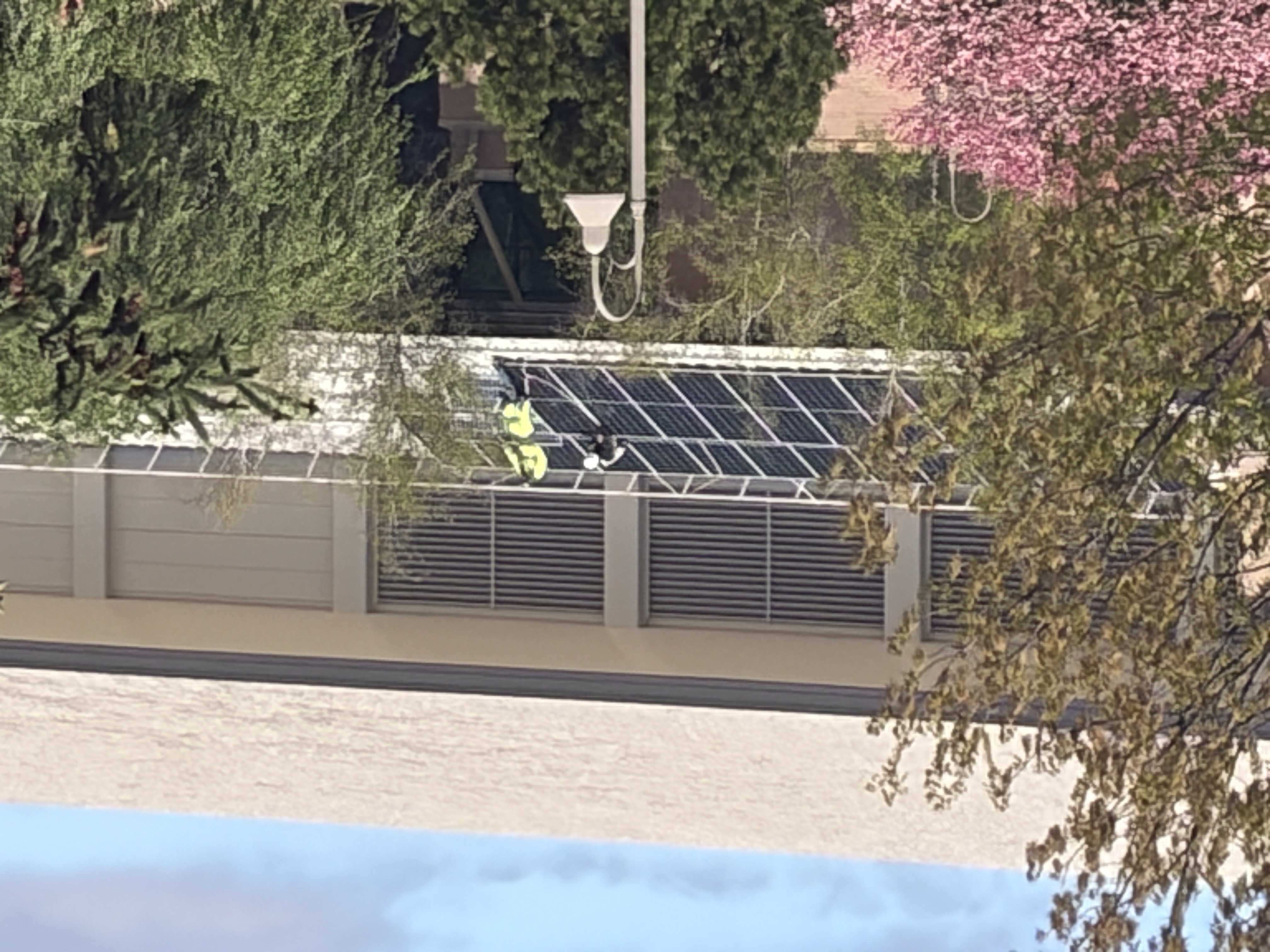
In Fall 2024, I posed the question “[w]hat should be the design of a Calvin solar farm?” to the students in my senior-level Design of Thermal Systems class, on our campus numbered ENGR333. The customer for their work was the university CFO.
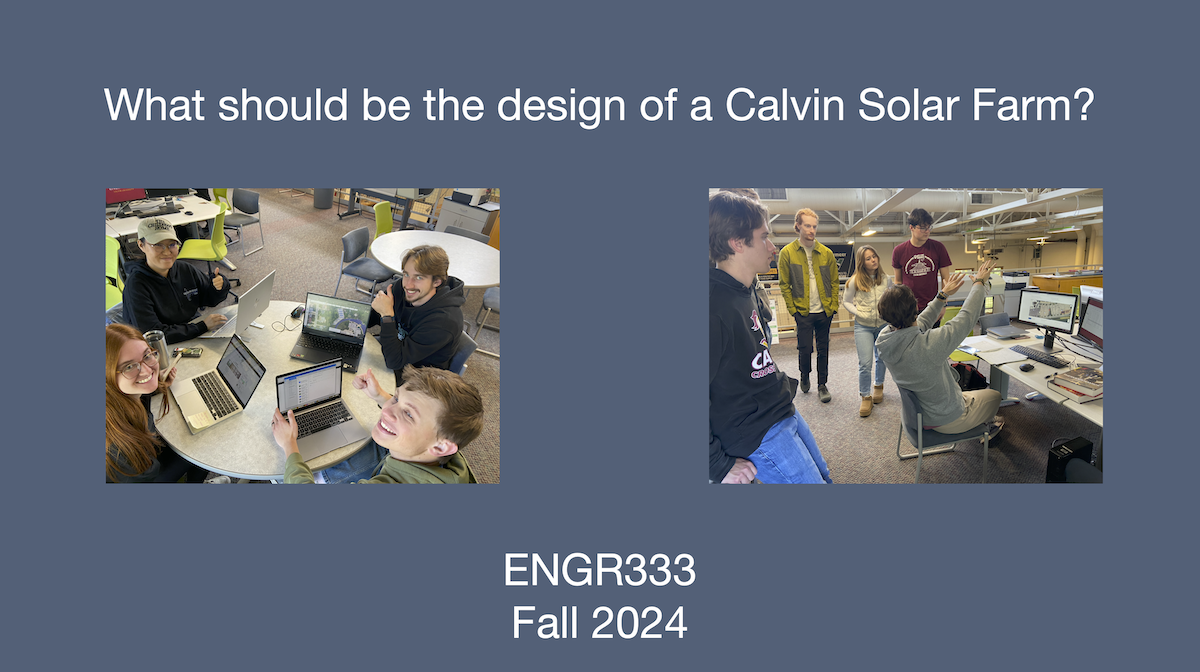
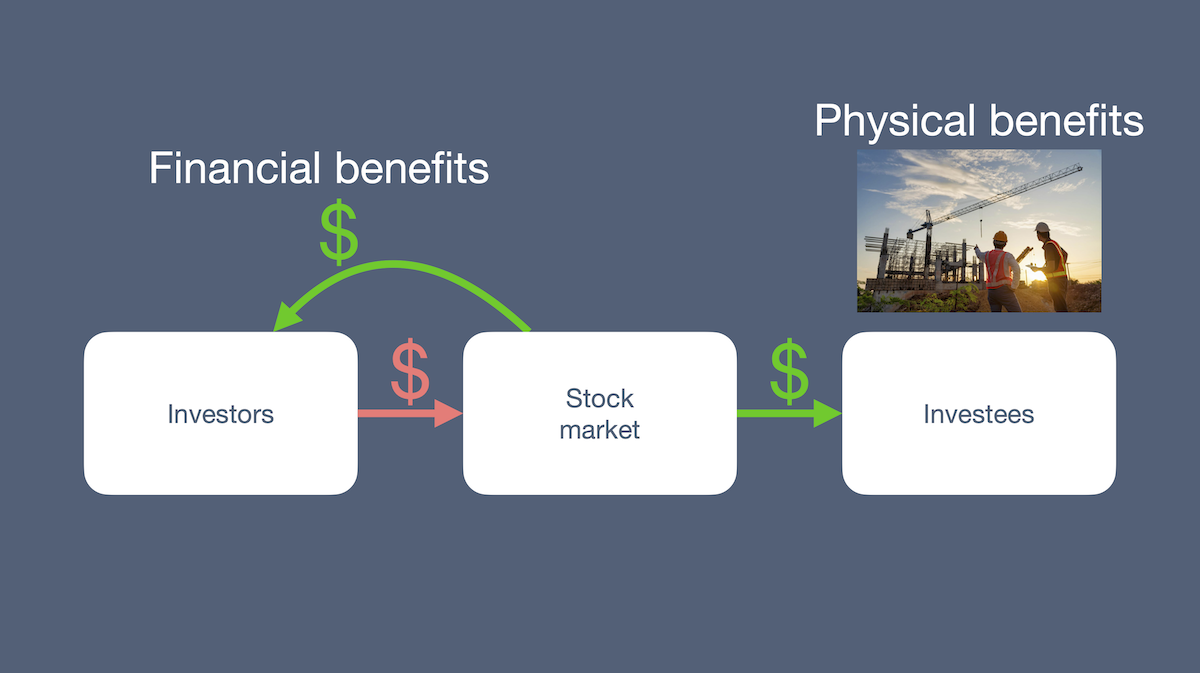
Together, the students, the customer, and I did a deep re-thinking of long-held assumptions about the way some financial and university systems work. First, we had to realize that every investment has financial and physical benefits. All investors, including university endowments, participate in “the market” to accrue financial benefits. But all investments find their way to investees who accrue physical benefits, say in the form of a new factory.
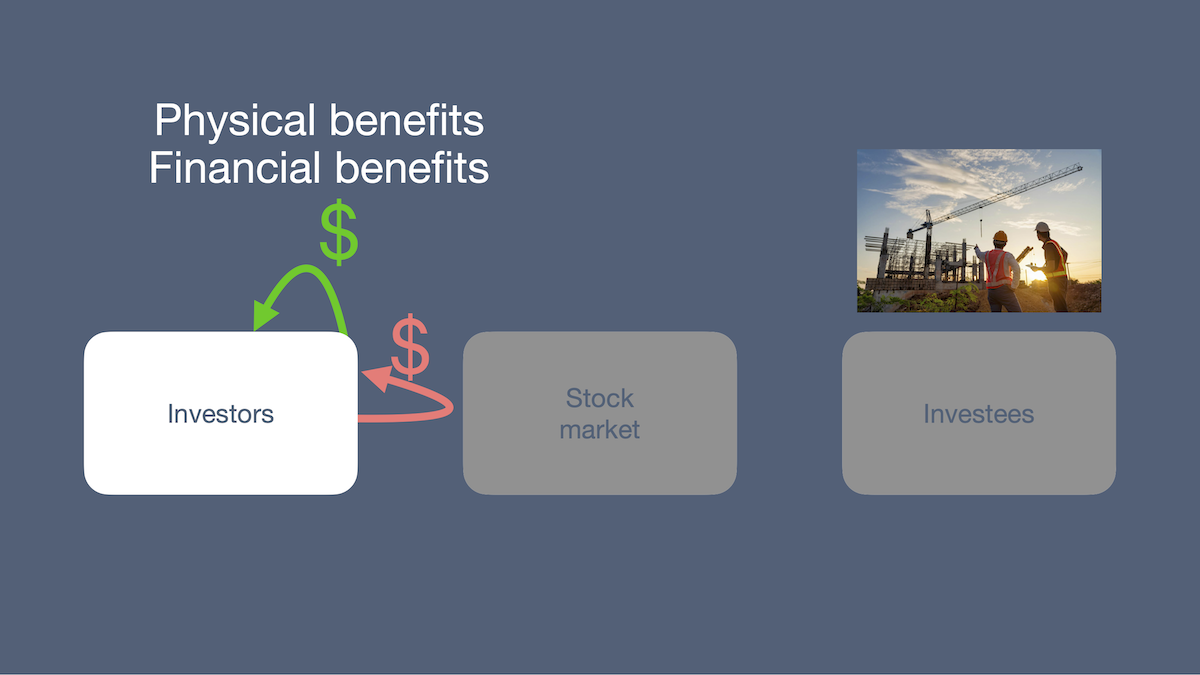
Second, Calvin had to re-envision the purpose of university endowments and how they operate. What if instead of investing in the market, we invest in ourselves by using endowment money to purchase solar panels? We could get the financial benefits, sure, in the form of reduced electricity bills. But we could also accrue the physical benefits of reduced reliance on the grid and reduced CO2 emissions.
After the semester, several students made additional presentations to the board of trustees, challenging them, in the friendliest possible way, to use endowment money to invest in ourselves rather than the market.
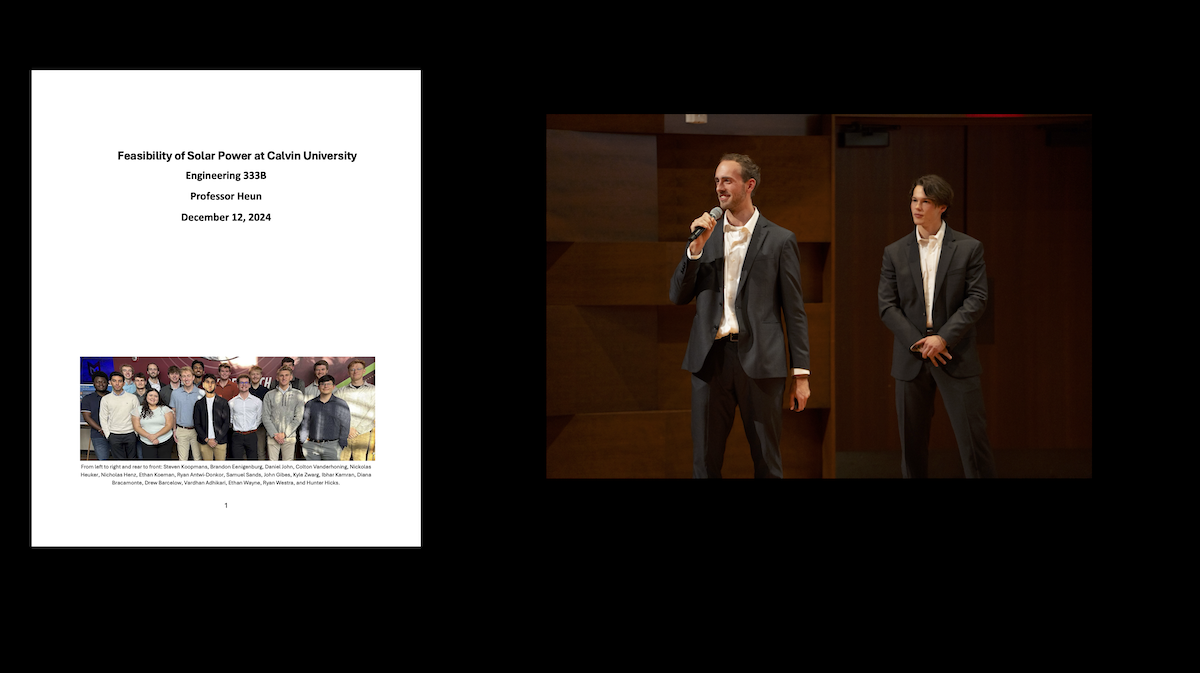
They were persuasive! Calvin University will use electricity cost savings to pay back the endowment with interest. Financial returns to the endowment will be less than a roaring year for the stock market. But more consistent and never negative. The presence of these solar panels on this campus will not solve the problem of CO2 emissions at the macro level. But this type of systemic change at the micro level can be seen as a prototype for systemic change at the macro level.
Thus, we see that imago Dei has more depth than “human creativity reflecting God the Father.” At our best, we designers can be pointing in redemptive directions as well, reflecting God, the Son, our redeemer, and the redeemer of the whole groaning creation!
So one last time. Engineering: what are we doing?
At our best, we engineers overcome the effects of the Fall and human finitude to design objects that solve problems, point in redemptive directions, and prepare to address the problem of scale.